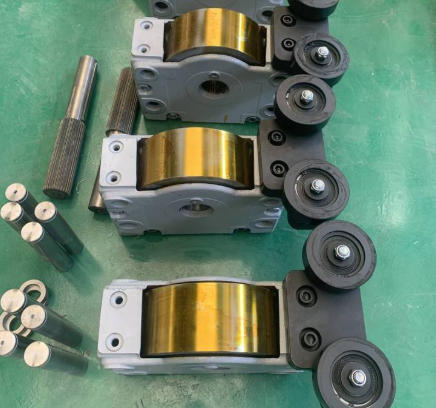
In modern heavy industrial manufacturing and bulk material handling, modular travel components have largely replaced custom-machined wheel assemblies. Leading this shift is the DRS wheel block system—a standardized, enclosed wheel block design engineered for cranes, transfer machinery, and automated handling equipment.
Understanding the full size spectrum and technical specifications of DRS wheel blocks is essential for engineers, equipment builders, and maintenance teams looking to balance payload capacity with space constraints.
DRS Size & Performance Specification Matrix
Model Size | Wheel Diameter (mm) | Max Wheel Load (Tonnes) | Typical Industrial Applications |
DRS 112 | 112 | Up to 2.75 t | Light transfer carts, automated guided vehicles (AGVs), light monorails |
DRS 125 | 125 | Up to 5.0 t | Tool changers, light portal gantries, indexing tables |
DRS 160 | 160 | Up to 7.0 t | Automated storage and retrieval systems (ASRS), medium transfer cars |
DRS 200 | 200 | Up to 10.0 t | Overhead crane end carriages, heavy transfer bogies, turntable drives |
DRS 250 | 250 | Up to 16.0 t | Heavy industrial gantry cranes, steel mill transfer equipment |
DRS 315 | 315 | Up to 22.0 t | High-capacity shipyard gantries, heavy machinery travel drives |
DRS 400 | 400 | Up to 30.0 t | Port container cranes, ladle cars, heavy transport platforms |
DRS 500 | 500 | Up to 40.0 t | Extreme-duty steelworks, heavy shipbuilding gantry travel systems |
Technical Specifications & Configuration Options
Beyond wheel diameter, each DRS size is customizable through a range of material, tread profile, and mounting specifications to suit specific operating environments.
1. Wheel Materials & Tread Options
Spheroidal Graphite Cast Iron (GGG70): The standard choice for heavy-duty rail-bound applications. GGG70 nodular iron features graphite inclusions that provide exceptional self-lubricating properties, minimizing rail wear and flange friction. It offers superior shock absorption, quiet operation, and outstanding wear resistance under intense wheel-rail contact.
Forged & Cast Steel (42CrMo / 45# Steel): Engineered for extreme payloads, high dynamic impact loads, and custom heavy-duty applications. Forged steel offers maximum tensile strength and fatigue resistance where nodular iron reaches its load limits. Additionally, steel cores are extensively used as high-strength hubs for bonded polyurethane and polyamide wheels to ensure maximum torque transmission and structural integrity.
Engineering Polymers (Polyamide & Polyurethane): Used primarily in indoor, cleanroom, or automated applications running directly on concrete floors or smooth steel tracks, providing non-marking floor protection, noise reduction, and smooth travel.
Tread Profiles: Available in double-flanged, single-flanged, flange-less (for use with lateral guide rollers), and concave or flat profiles tailored to standard crane rail profiles (e.g., A45, A65, A100).
2. Multi-Surface Mounting Interfaces
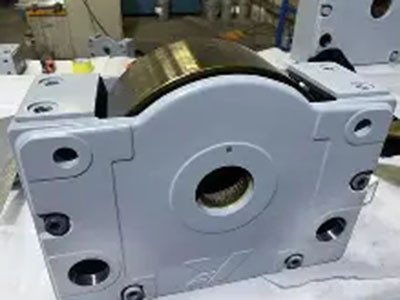
The enclosed housing of the DRS wheel block features precision-machined mounting faces on multiple sides, enabling seamless structural integration:
Top Connection: Bolted directly underneath structural hollow sections or crane end beams.
Side & Pin Connections: Flange-mounted or attached via torque arms for direct-drive gearbox connection.
End Connection: Easily retrofitted into existing frame cutouts with slotted hole patterns for quick laser alignment.
Key Sizing & Selection Criteria
When selecting the appropriate DRS wheel block size for a new or existing system, engineering calculations center on three primary parameters:
Maximum Wheel Load: The sum of deadweight and live payload divided by the number of load-bearing wheels, adjusted for dynamic acceleration and shock factors.
Duty Class & Travel Speed: Higher travel speeds and continuous FEM/ISO duty cycles generate friction heat in bearings. Choosing a larger wheel size lowers rotational speed (RPM) and extends bearing service life.
Rail Match & Track Geometry: The tread width must align with the rail head profile to ensure adequate contact surface and prevent excessive flange friction or derailment risk.
Summary
The modular DRS wheel block standard simplifies engineering design by eliminating custom wheel machining while offering certified load performance across eight standardized sizes. Matching the correct DRS model size, wheel material, and mounting configuration ensures long operational lifespans, minimal track wear, and reliable travel performance.